With proud new introduce Renault Pulse for 2012, this car is powered by 1.5 dCi diesel engine 8V SOHC with displacement 1461cc and 5-speed Manual transmission that produces a maximum power of 63 bhp @ 4000 RPM and a maximum torque of 160 Nm @ 2000 RPM. Renault pulse has Fuel System Common rail diesel and Fuel tank Capacity 41 L.
The Renault Pulse feature power steering, power windows, remote central locking, air-conditioner, rear defogger, rear washer/wiper, leather seats, tinted glass, steering mounted controls, electrically adjustable ORVMs, dash integrated music system and rear parcel tray.
Renault Pulse is high on safety norms. 2 airbags, fog lamps, rear seat belts, Front and rear adjustable headrests and ISOFIX child seat fixing points are standard with Renault Pulse. One good thing about Renault Pulse is the unique 2+2 year or 80,000 Km warranty under the Renault Complete Care package that will be offered by the company which also includes sops like Concierge services, 24X7 roadside assistance, Navigation assistance, etc. Renault is also aggressively working on increasing the sales and service outlets of the company to promote the brand and address needs of their customers.
Pages
▼
Thursday, April 26, 2012
2013 Ford Fusion
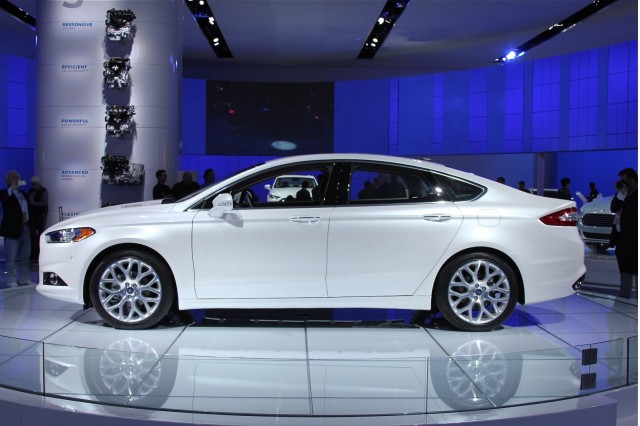
New introduction ford fusion for 2013.
The 2013 Fusion’s interior is just as stylish as its exterior, with flowing lines and contoured shapes displacing the straight-edged design of the current car. The all-new Fusion is also longer, wider and taller than the outgoing model, resulting in improved interior space. In fact, the new car boasts equal or better interior space in every category other than front-seat hip room. However, trunk space has been reduced, although a lower threshold should make loading easier.
In addition to that added space, passengers will also enjoy the technology packed into the 2013 Fusion. Of course the latest version of SYNC is included, but the Fusion also gains Ford’s Lane Keeping System, adaptive cruise control, active park assist and Blind Spot Information System with cross-traffic alert.
The standard 2013 Ford Fusion is available in S, SE and Titanium trims and will be available with three engines. The base 2013 Ford Fusion is a 2.5-liter naturally aspirated inline-four with 170 horsepower and 170 pound-feet of torque, mated solely to a six-speed automatic transmission. We’re sure it’s a fine powerplant, but our interest is more settled on the next two: the 2013 Ford Fusion 1.6 EcoBoost four with 179 hp and 172 lb-ft, and the range-topping 2.0-liter EcoBoost four with 237 hp and 250 lb-ft.
Both 2013 Ford Fusion engine specs can be had with the same six-speed automatic, though the smaller 1.6-liter engine can be mated to a six-speed manual box. Front-wheel drive is standard across the board, but top-of-the-line 2013 Ford Fusion 2.0 EcoBoost engine can be had with all-wheel drive.
The 2013 Ford Fusion hybrid gets all-new hardware that represents Ford’s third generation of hybrid tech, starting with a 2.0-liter Atkinson-cycle inline-four, downsized from 2.5 liters in the prior car. The new 2013 Ford Fusion is expected to return 47/44 mpg (city/highway), up from 41/36 mpg for the current hybrid, and can travel at up to 62 mph on electrical power alone, versus 47 mph in the old car. Total power from the 2013 Ford Fusion hybrid engine and motor is 185 hp and 130 lb-ft.
The entire system is built by Ford in Michigan, although the 2013 Ford Fusion batteries are imported from Mexico. The 2013 Ford Fusion battery pack now uses lithium-ion chemistry, which provides better power density that the prior nickel-metal hydride batteries and an improved regenerative braking system can recover about 95 percent of the energy that otherwise would be lost to friction. As a result, the 2013 Ford Fusion gasoline engine can turn off about ten percent more often than in the previous Fusion hybrid.
The 2013 Fusion’s interior is just as stylish as its exterior, with flowing lines and contoured shapes displacing the straight-edged design of the current car. The all-new Fusion is also longer, wider and taller than the outgoing model, resulting in improved interior space. In fact, the new car boasts equal or better interior space in every category other than front-seat hip room. However, trunk space has been reduced, although a lower threshold should make loading easier.
In addition to that added space, passengers will also enjoy the technology packed into the 2013 Fusion. Of course the latest version of SYNC is included, but the Fusion also gains Ford’s Lane Keeping System, adaptive cruise control, active park assist and Blind Spot Information System with cross-traffic alert.
The standard 2013 Ford Fusion is available in S, SE and Titanium trims and will be available with three engines. The base 2013 Ford Fusion is a 2.5-liter naturally aspirated inline-four with 170 horsepower and 170 pound-feet of torque, mated solely to a six-speed automatic transmission. We’re sure it’s a fine powerplant, but our interest is more settled on the next two: the 2013 Ford Fusion 1.6 EcoBoost four with 179 hp and 172 lb-ft, and the range-topping 2.0-liter EcoBoost four with 237 hp and 250 lb-ft.
Both 2013 Ford Fusion engine specs can be had with the same six-speed automatic, though the smaller 1.6-liter engine can be mated to a six-speed manual box. Front-wheel drive is standard across the board, but top-of-the-line 2013 Ford Fusion 2.0 EcoBoost engine can be had with all-wheel drive.
The 2013 Ford Fusion hybrid gets all-new hardware that represents Ford’s third generation of hybrid tech, starting with a 2.0-liter Atkinson-cycle inline-four, downsized from 2.5 liters in the prior car. The new 2013 Ford Fusion is expected to return 47/44 mpg (city/highway), up from 41/36 mpg for the current hybrid, and can travel at up to 62 mph on electrical power alone, versus 47 mph in the old car. Total power from the 2013 Ford Fusion hybrid engine and motor is 185 hp and 130 lb-ft.
The entire system is built by Ford in Michigan, although the 2013 Ford Fusion batteries are imported from Mexico. The 2013 Ford Fusion battery pack now uses lithium-ion chemistry, which provides better power density that the prior nickel-metal hydride batteries and an improved regenerative braking system can recover about 95 percent of the energy that otherwise would be lost to friction. As a result, the 2013 Ford Fusion gasoline engine can turn off about ten percent more often than in the previous Fusion hybrid.
Nissan Murano 2012
Nissan has launched new crossover car, The Nissan Murano is a crossover vehicle that integrates function and high fashion. It combines sport-utility cargo capacity and sporty driving dynamics.
The Murano can be had with either front-wheel, or all-wheel drive, and is available in S, SV, SL, or LE trim levels.
All Muranos feature a standard VQ-series 3.5-liter DOHC V6 rated at 260 horsepower and 240 lb-ft of torque on regular unleaded gasoline, and an Xtronic CVT transmission. Murano is available in front-wheel drive or with an Intuitive All-Wheel Drive system, and all Muranos come with Vehicle Dynamic Control (VDC) and Traction Control System (TCS) standard.EPA estimated fuel economy is 18 mpg city/24 mpg highway and 20 mpg combined with front-wheel drive and 18/23/20 with all-wheel drive.
Inside the 2012 Nissan Murano's cabin you'll find an attractively styled space that rivals that of its upscale Infiniti FX cousin for quality of materials and assembly. The Murano also gets high marks for the intuitive operation of technology features including the navigation system, rear seat video entertainment setup and iPod interface.
There's also seating for five passengers, including a backseat with abundant head- and legroom and seatbacks that recline for greater comfort. Behind those rear seats is 31.6 cubic feet of cargo room, a number that's on par with the Murano's competitors. Folding those rear seatbacks down creates a nice flat load floor with 64 cubic feet of room, which falls a tad short of the space available in other midsize five-passenger SUVs.
Standard features for the Murano include 18-inch (20-inch on LE) alloy wheels, cruise control, LED rear taillights, and dual zone automatic air conditioning. Standard safety equipment includes, vehicle traction and stability control, brake assist, six airbags, and front seat active head restraints.
New audio and entertainment features range from the addition of standard iPod connectivity and Bluetooth hands-free phone system to SV models to a Bose audio system with nine speakers plus dual subwoofers for SL models.
All 2012 Nissan Murano models feature standard antilock brakes, traction and stability control, active front head restraints, front-seat side-impact airbags and full-length side curtain airbags. In Edmunds brake testing, an all-wheel-drive Murano with 18-inch wheels came to a stop from 60 mph in 126 feet -- a good performance for this class.
In government crash testing, the Murano received an overall rating of four stars (out of a possible five), with four stars for overall front impact protection and five stars for side impact protection. The Insurance Institute for Highway Safety gave the Murano its highest rating of "Good" in both the frontal-offset and side crash tests.
The Murano can be had with either front-wheel, or all-wheel drive, and is available in S, SV, SL, or LE trim levels.
All Muranos feature a standard VQ-series 3.5-liter DOHC V6 rated at 260 horsepower and 240 lb-ft of torque on regular unleaded gasoline, and an Xtronic CVT transmission. Murano is available in front-wheel drive or with an Intuitive All-Wheel Drive system, and all Muranos come with Vehicle Dynamic Control (VDC) and Traction Control System (TCS) standard.EPA estimated fuel economy is 18 mpg city/24 mpg highway and 20 mpg combined with front-wheel drive and 18/23/20 with all-wheel drive.
Inside the 2012 Nissan Murano's cabin you'll find an attractively styled space that rivals that of its upscale Infiniti FX cousin for quality of materials and assembly. The Murano also gets high marks for the intuitive operation of technology features including the navigation system, rear seat video entertainment setup and iPod interface.
There's also seating for five passengers, including a backseat with abundant head- and legroom and seatbacks that recline for greater comfort. Behind those rear seats is 31.6 cubic feet of cargo room, a number that's on par with the Murano's competitors. Folding those rear seatbacks down creates a nice flat load floor with 64 cubic feet of room, which falls a tad short of the space available in other midsize five-passenger SUVs.
Standard features for the Murano include 18-inch (20-inch on LE) alloy wheels, cruise control, LED rear taillights, and dual zone automatic air conditioning. Standard safety equipment includes, vehicle traction and stability control, brake assist, six airbags, and front seat active head restraints.
New audio and entertainment features range from the addition of standard iPod connectivity and Bluetooth hands-free phone system to SV models to a Bose audio system with nine speakers plus dual subwoofers for SL models.
All 2012 Nissan Murano models feature standard antilock brakes, traction and stability control, active front head restraints, front-seat side-impact airbags and full-length side curtain airbags. In Edmunds brake testing, an all-wheel-drive Murano with 18-inch wheels came to a stop from 60 mph in 126 feet -- a good performance for this class.
In government crash testing, the Murano received an overall rating of four stars (out of a possible five), with four stars for overall front impact protection and five stars for side impact protection. The Insurance Institute for Highway Safety gave the Murano its highest rating of "Good" in both the frontal-offset and side crash tests.
Wednesday, April 25, 2012
Renault Megane RS Trophy 2012
New introduction Renault Megane RS Trophy for 2012.
The renault Megane RS Trophy interior has the Recaro bucket seats (fabric or leather, depending on market) add to the cabin’s unmistakably sporty feel, as does the central display which shows the data provided by the RS Monitor. This innovative onboard data-logging system records performance and displays a range of mechanical parameters in real-time, a feature which owners will especially appreciate during track days, an exercise to which the Megane RS Trophy lends itself particularly well.
The Renault RS Trophy 2012 With maximum power of 265hp (up 15hp), peak torque of 360Nm (+20Nm) available across a particularly broad rev-band (3,000 to 5,000rpm), a power-to-weight ratio of 5.09kg/hp and specific power of 132.5hp/litre, the Renault Megane RS Trophy boasts an exceptional performance package. Maximum turbo pressure has been uprated to 2.5 bar (up 0.2 bar), while the air intake design has been revised to take the higher pressure and higher running temperatures into account.
Performance has been enhanced in the process, and the result is a 0-to-100kph time of just 6.0s (down 0.1s), a top speed of 254kph (up 4kph) and the 1,000km standing start in 25.4s (down 0.3s). In addition to the finely-tuned set-up of the Cup chassis and the standard limited slip differential, a new tyre fitment contributes to the car’s exceptional road-holding on dry roads, especially through tighter turns, as well as in the wet. The design of the Formula 1-inspired Bridgestone Potenza RE050A’s asymmetric, directional tread pattern and the form of its tread blocks provide outstanding grip, stability and acoustic comfort, whatever the conditions. Last but not least, Renault Mégane RS Trophy’s fuel-efficiency has been carefully optimised to return combined-cycle fuel consumption of just 8.2 litres/100km, equivalent to 190g of CO2/km, which represents a saving of 0.2 litres/100km and 5g/km over Renault Mégane RS at the time of the latter’s launch.
The Renault Megane RS Trophy is recognizable at a glance thanks to its black roof, specific decals, new rear lip spoiler, 19-inch Gloss Black STEEV wheels with red piping and RS valve caps (optional or standard, depending on market) and numbered plaque. The LED daytime running lights also play a part in its striking looks. Megane RS Trophy marks the introduction of a new Sirius Yellow finish, an emblematic metallic paint that will be particularly appreciated by Renault Sport fans. This specific body color is available as an alternative to Glacier White, Etoile Black and Cassiopee Grey.
The renault Megane RS Trophy interior has the Recaro bucket seats (fabric or leather, depending on market) add to the cabin’s unmistakably sporty feel, as does the central display which shows the data provided by the RS Monitor. This innovative onboard data-logging system records performance and displays a range of mechanical parameters in real-time, a feature which owners will especially appreciate during track days, an exercise to which the Megane RS Trophy lends itself particularly well.
The Renault RS Trophy 2012 With maximum power of 265hp (up 15hp), peak torque of 360Nm (+20Nm) available across a particularly broad rev-band (3,000 to 5,000rpm), a power-to-weight ratio of 5.09kg/hp and specific power of 132.5hp/litre, the Renault Megane RS Trophy boasts an exceptional performance package. Maximum turbo pressure has been uprated to 2.5 bar (up 0.2 bar), while the air intake design has been revised to take the higher pressure and higher running temperatures into account.
Performance has been enhanced in the process, and the result is a 0-to-100kph time of just 6.0s (down 0.1s), a top speed of 254kph (up 4kph) and the 1,000km standing start in 25.4s (down 0.3s). In addition to the finely-tuned set-up of the Cup chassis and the standard limited slip differential, a new tyre fitment contributes to the car’s exceptional road-holding on dry roads, especially through tighter turns, as well as in the wet. The design of the Formula 1-inspired Bridgestone Potenza RE050A’s asymmetric, directional tread pattern and the form of its tread blocks provide outstanding grip, stability and acoustic comfort, whatever the conditions. Last but not least, Renault Mégane RS Trophy’s fuel-efficiency has been carefully optimised to return combined-cycle fuel consumption of just 8.2 litres/100km, equivalent to 190g of CO2/km, which represents a saving of 0.2 litres/100km and 5g/km over Renault Mégane RS at the time of the latter’s launch.
The Renault Megane RS Trophy is recognizable at a glance thanks to its black roof, specific decals, new rear lip spoiler, 19-inch Gloss Black STEEV wheels with red piping and RS valve caps (optional or standard, depending on market) and numbered plaque. The LED daytime running lights also play a part in its striking looks. Megane RS Trophy marks the introduction of a new Sirius Yellow finish, an emblematic metallic paint that will be particularly appreciated by Renault Sport fans. This specific body color is available as an alternative to Glacier White, Etoile Black and Cassiopee Grey.